-

Damnum Sine Injuria vs Injuria Sine Damnum: Simple Explanation with Indian Cases
Ever wondered why the law sometimes ignores your loss but jumps into action when no real damage occurs? In this fun and simple blog, we break down the legal maxims damnum sine injuria and injuria sine damnum with real Indian examples and landmark case laws like Bhim Singh and Rudul Sah.
-
🌺 The Hindu Marriage Act, 1955 — Explained the Fun & Simple Way!
The Hindu Marriage Act, 1955 is the rulebook that reshaped Hindu marriages in India—making them fairer, modern, and legally protected. In this fun and easy guide, we break down its purpose, who it applies to, requirements for a valid marriage, divorce grounds, important amendments, and present-day challenges. A perfect beginner-friendly introduction to understanding Hindu marriage…
-
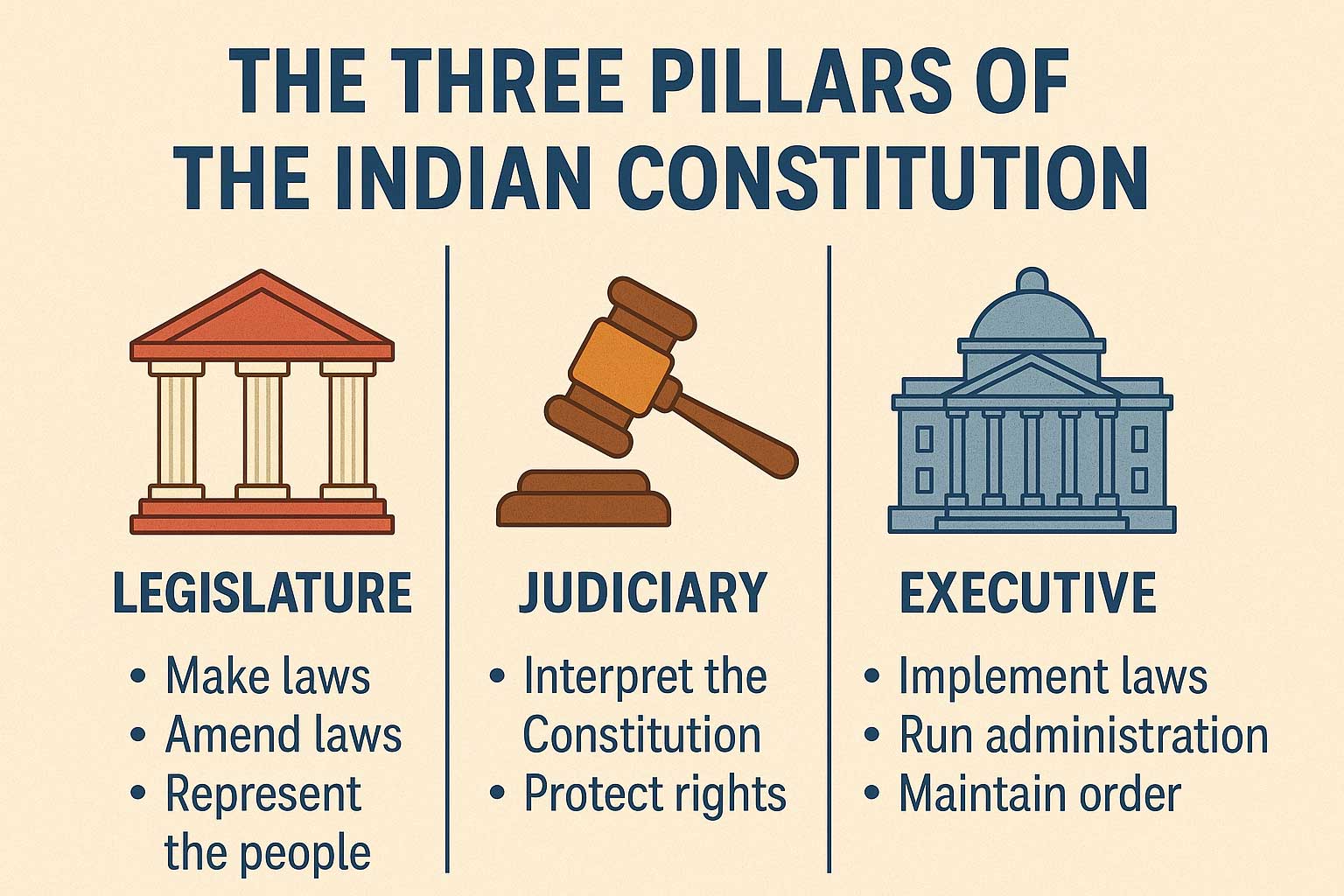
🇮🇳 The Three Pillars of the Indian Constitution: The Power Trio That Runs India
The Indian Constitution stands strong on three powerful pillars — the Legislature, Judiciary, and Executive. Each plays a unique role: one makes the laws, one interprets them, and one makes sure they are implemented. Together, they keep Indian democracy running smoothly. Here’s a fun and simple breakdown of their powers, duties, and why they matter!
-
🇮🇳 Indian Constitution The Living, Breathing Guidebook of Our Democracy
The Indian Constitution isn’t just a rulebook — it’s a living, breathing guide that evolves with society. From landmark Supreme Court judgments to major amendments, it adapts to new challenges while protecting the core values of democracy. This fun and insightful article breaks down why the Constitution continues to stay relevant, flexible, and incredibly powerful…